

November 27 is Thanksgiving in the US.
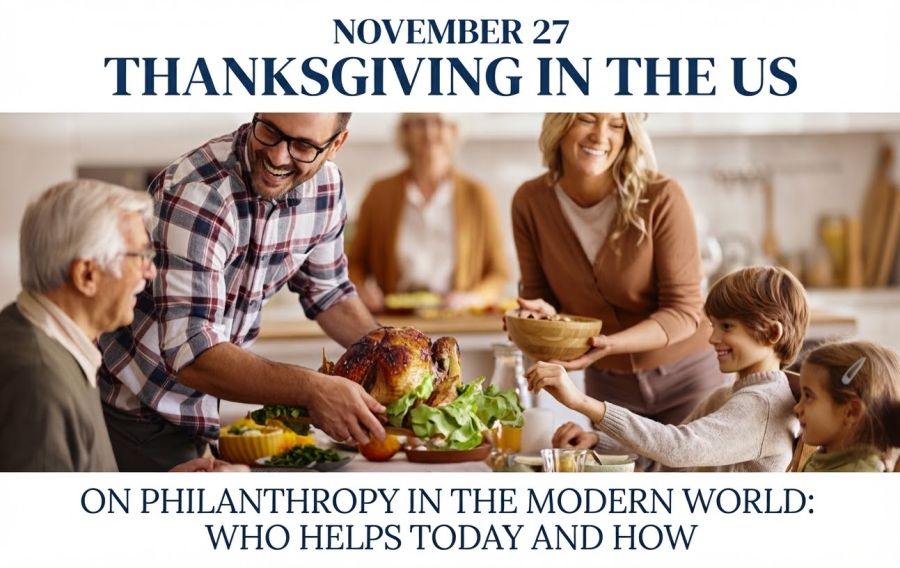
On Philanthropy in the Modern World: Who Helps Today and How Bakuinform.az
On Thanksgiving, owners of billion-dollar fortunes traditionally combine family celebrations with major charity drives, funding for food banks, and transferring assets to endowment funds. The most notable example in recent years remains the annual tradition of Warren Buffett, who, according to media reports, directed a stock package worth about $5.5 billion to charity in November 2026.
Modern philanthropy has long moved beyond one-off donations or quiet patronage. Today, it is a global industry with a turnover of hundreds of billions of dollars, complex financial instruments, and clear ties to the cultural and tax calendars of different countries. We break down with numbers and examples how charity works today, who sets the tone in it, and why billionaires prefer giving away stocks instead of cash.
For many representatives of the Forbes list, late November is a time for closing the fiscal year and distributing capital through family foundations.
Warren Buffett's Record Tranches Ahead of Thanksgiving 2026, the 96-year-old investor converted 6,150 Berkshire Hathaway Class A shares into 9.225 million Class B shares. Nearly $2.2 billion of this amount went to the Susan Thompson Buffett Foundation, named after his late wife. The remaining funds were distributed equally among his children's three foundations (the Sherwood Foundation, Howard G. Buffett Foundation, and NoVo Foundation). This gift was four times larger than his similar donation in 2025 ($1.35 billion).
Systemic Philanthropy within The Giving Pledge. Many participants in The Giving Pledge initiative use the holiday season to announce long-term grants in healthcare, education, and poverty alleviation. Transferring shares directly to foundations allows billionaires not only to scale social projects but also to optimize their tax burden before the end of the calendar year.
In addition to multi-billion-dollar transfers to foundations, wealthy families actively support local initiatives tied to the holiday's main tradition—the festive dinner.
• Funding food banks. Billionaire families (including the foundations of MacKenzie Scott, Michael Bloomberg, and Ray Dalio) traditionally allocate targeted grants to major networks like Feeding America and regional shelters. These funds are used to purchase hundreds of thousands of grocery kits with turkey for low-income families.
• Corporate and family drives. Owners of major retail and logistics empires (such as the Walton family heirs of Walmart or Wall Street hedge fund founders) sponsor free charity meals in major US metropolises and fund the operation of mobile kitchens.
Personal Volunteering and Private Events For some billionaires, Thanksgiving is an opportunity to involve the younger generation of their family in charity.
• Serving food. Some businesspeople, along with their children, work incognito or as part of local drives as volunteers at soup kitchens, personally assembling food baskets and handing out hot meals. • Private gala dinners and auctions. In locations such as Palm Beach, Aspen, and New York, private charity receptions are held during the holiday weekend for a narrow circle of patrons, featuring art pieces, celebrity dinners, or exclusive trips as auction lots, with all proceeds going to medical and children's foundations.
Key Figures of Global Philanthropy The scale of the sector is confirmed by fresh industry reports from 2025–2026:
• $617.2 billion — the total volume of donations in the US in 2025, according to the Giving USA 2026 report. The market crossed the $600 billion mark for the first time, showing a 5.7% annual growth. Of this amount, 64% ($394.2 billion) came from individuals, 19% ($117.15 billion) from foundations, 10% ($62.19 billion) from bequests, and 7% ($43.67 billion) from corporations. • $250 billion — the annual contribution of the world's ultra-high-net-worth individuals (UHNW) to philanthropy, according to an analytical report by Altrata. Over the past three years, this amount has grown by 32%. • $4 billion in a single day — the record collection of the GivingTuesday campaign in December 2025, according to GivingTuesday Data Commons. 38.1 million people took part in the campaign, and the total amount raised since the movement's launch in 2012 reached $22.5 billion. • 61% of the Earth's population regularly donates money to charity (averaging about 1% of personal income), according to the global World Giving Report 2026 study. Asia (68%) and Africa (67%) became the leaders in resident engagement.
Insight: Despite loud headlines about record donations by billionaires, the Forbes 400 Philanthropy Score 2026 ranking shows that America's 400 richest people have given $366 billion to charity over their entire lifetimes—which is only 4.4% of their combined net worth.
Five Models of Global Philanthropy: From New York to Dubai Fundraising calendars and methods of giving directly depend on local traditions and how strongly the state participates in the social protection of citizens.
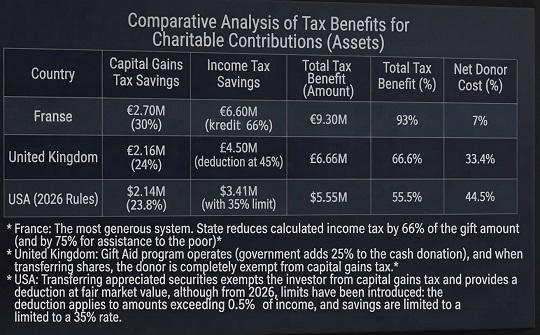
- USA: Stock Market Shares and GivingTuesday. Peak activity falls in November (Thanksgiving and the subsequent GivingTuesday) and December, when the fiscal year closes. American philanthropists (Warren Buffett, MacKenzie Scott, Michael Bloomberg) prefer transferring appreciated stocks rather than cash to foundations. In November 2026 alone, 96-year-old Warren Buffett directed a $5.5 billion package of Berkshire Hathaway shares to family foundations. Simultaneously, during the holidays, billionaires fund food banks like Feeding America.
2. Europe: Corporate Endowments and Quietness. State social support is well-developed in Europe, so local patrons (Bernard Arnault, the Rausing family, the Wallenberg dynasty) pay for basic food less often and invest more frequently in science, art, climate, and fundamental medicine. Peak fundraising occurs around Christmas, and publicizing personal transfers is not customary. The region's main feature is business ownership through non-profit foundations (as with IKEA or Bosch), where capital is passed down by inheritance. For example, in September 2026, German magnate Klaus-Michael Kühne's €42.2 billion fortune transferred entirely to his charitable foundation, Kühne-Stiftung.
3. Middle East: Religious Duty and Royal Campaigns. In the UAE, the main charity season is the holy month of Ramadan. Donations rely on the Islamic tradition of mandatory giving to those in need (zakat). Major foundations established by ruling families (such as Sheikh Mohammed's initiatives in Dubai or Prince Alwaleed's Alwaleed Philanthropies) annually direct hundreds of millions of dollars toward food programs, hospital construction, and humanitarian aid worldwide.
4. India: The 2% Profit Law and Diwali. India is the only major economy in the world where the law obligates profitable companies to spend at least 2% of their net profit on Corporate Social Responsibility (CSR) projects. Private philanthropists (the Tata family, whose Tata Trusts hold over $100 billion in assets, or Wipro founder Azim Premji) become especially active during the Diwali festival and the autumn giving week Daan Utsav, funding oncology clinics and rural schools.
5. China and East Asia: Digital Crowdfunding. In China, philanthropy is built around tech ecosystems. Giant Tencent annually holds the nationwide online marathon "99 Giving Day" (September 9), matching micro-donations from millions of users with corporate and partner funds. In South Korea and Japan (Samsung's Lee family, Uniqlo head Tadashi Yanai), major grants are tied to the Lunar New Year or disaster relief efforts.
How It Works: 3 Main Tools of Billionaires The world's richest people rarely transfer money directly to shelters. Special legal wrappers are used to manage capital:
1. Donor-Advised Funds (DAFs). A popular tool in the US that works like a "charitable bank account." A donor places stocks into it, immediately receives a tax deduction, and to real non-... [source text truncated here] - Where Philanthropy Is Heading: 3 Trends of 2026 1. From one-off aid to systemic investments. Foundations are moving away from "putting out fires" in favor of long-term programs. According to the global Brunswick Group 2026 survey, the top priorities for philanthropists have become healthcare (58%), education (45%), and climate (32%). At the same time, 76% of major donors sign multi-year contracts with foundations instead of making one-time payouts.
2. Adoption of artificial intelligence. According to a Goldman Sachs study, 20% of major philanthropists already use AI to evaluate grant effectiveness and source projects, while another 19% plan to implement it in the near future.
3. The Great Wealth Transfer. In the coming years, the world is undergoing the largest generational shift of capital owners in history. New philanthropists from the tech and AI sectors more frequently apply a trust-based philanthropy approach—issuing grants to foundations without rigid bureaucratic reporting, allowing teams on the ground to decide for themselves where to direct the funds.
In Lieu of a Summary: How the Charitable Organization "For Azerbaijan," Holding 501(c)(3) Status in the US and Official Registration in Azerbaijan, Concluded 2026 In 2026, the organization focused on implementing educational programs for girls, psychological rehabilitation of the population, supporting culture, and participating in humanitarian initiatives. Over the course of its work, the organization has provided support to 751 families affected by conflicts and crises.
Key Results and Areas of Activity in 2026:
• Educational programs and support for women. The organization expanded educational assistance for young women from vulnerable backgrounds, reaching 57 girls. Under the Shahla Garayeva Scholarship Program, 20 girls are receiving higher education, while another 20 have begun studying English. • Psychological assistance and PTSD work. In February 2026, with the support of BP Azerbaijan, the translation and professional editing of the book Cognitive Processing Therapy into the Azerbaijani language was successfully completed. The post-traumatic psychological rehabilitation project (APRIA) gained international recognition and was covered in foreign media, including the Italian TV channel RAI. • Humanitarian and charity drives. The For Azerbaijan team took part in the traditional "Forward with Pride" charity run, co-organized with the Ministry of Youth and Sports and other agencies. The funds raised were directed to the YAŞAT Foundation to support war veterans and families of martyrs. • Cultural initiatives. Throughout 2026, the foundation continued to expand projects in the fields of art and culture aimed at developing the creative potential of youth and preserving heritage. - • Financial and corporate transparency. All activities of the organization, founded by approximately 50 Azerbaijani professionals from around the world, continue to be built on principles of transparency. The founders independently cover the foundation's administrative expenses, allowing 100% of incoming donations to be directed straight toward charitable projects.