


"Cinematic Monster" in Wide Release: Why Christopher Nolan's "The Odyssey" (2026) is an Assault on the Audience
## 🇺🇸 English Version## "Cinematic Monster" in Wide Release: Why Christopher Nolan's "The Odyssey" (2026) is an Assault on the Audience
Larissa Jevanshir
Deciding to visit the cinema to watch Christopher Nolan's The Odyssey, I frankly expected to see a large-scale, epic canvas based on the world literature masterpiece known since ancient times, interpreted anew by a modern director. But what unfolded on the screen was so difficult to process that a lingering feeling of rejection and the thought "how can anyone call this art?" persisted for a very long time. The film turned out to be a true "cinematic monster" born of a diseased imagination, which—likely by some misunderstanding—was granted a massive budget and launched into wide release. How else can one describe it when the audience is bombarded with deafening sound, towering terrifying figures, and unrelenting brutality? The viewer in the hall becomes a hostage to the director's ambitions: the darkness and enclosed space of the cinema offer no defense, except to physically close one's eyes and cover one's ears. This kind of filmmaking truly crosses the line. Instead of catharsis (cleansing through empathy, as intended in classical art), the viewer receives only emptiness, anxiety, and stress—completely at the mercy of a full-fledged "cinematic monster" that preys on basic human reactions.
No, this is not a psychological drama, as critics try to convince us. This is a genuine psychological attack on the audience. From the very first minutes, you are plunged into an atmosphere of bleak darkness, cruelty, and deafening, ear-splitting sound. The director intentionally assaults the senses and breaks human perception, leaving the person in the theater no chance to shield themselves from the nightmare on screen. At some point, you catch yourself sitting and watching the film while literally closing your eyes and plugging your ears. This is a bleak, exhausting spectacle, and one wants to speak about it even more harshly because the industry has clearly crossed the line. I cannot understand the purpose of inflicting such psychological violence on people. Why has a trip to the cinema turned into a session of mental masochism at one's own expense?. We go to the movies for catharsis, reflection, and aesthetic pleasure, not for anxiety disorders and emotional emptiness. I write this commentary knowing that a single review is unlikely to change anything in the global world of filmmaking. But if it saves even one person with a living, sensitive psyche from going to see this "monster," then I did not write it in vain. Protect yourself and your nerves—stay away from this film.
I believe the phrase "closing one's eyes and plugging one's ears" accurately conveys the oppressive and heavy impression that Christopher Nolan's The Odyssey made not only on me but also on a significant portion of the audience. The director has indeed turned the ancient myth into a dark, psychologically draining thriller. And this is a completely arbitrary choice in relation to Homer.
An epic work always carries a deep meaning that goes far beyond a simple retelling of adventures. It is a great pity that under the hand of the most commercially successful director of the 21st century, as the media characterizes Christopher Nolan, The Odyssey has turned into a horror film, without even a hint of regret. If until now we perceived The Odyssey as an immortal epic that entered history, knowing that Homer's epic holds a central, fundamental place in the history of world literature, then after this film, the youth will certainly not know what to think...
In his work, Homer showed the discovery of a person's path to themselves: Odysseus's wanderings are a metaphor for life's journey, overcoming temptations, fears, and losses to find one's true self and home. The triumph of reason over brute force: Odysseus defeats monsters (the Cyclops, the Sirens) not with physical might, but with cunning, intelligence, and endurance. The value of family and fidelity: The image of Penelope, waiting for her husband for 20 years, and Odysseus's devotion to his homeland affirm the sanctity of marriage and duty. The law of hospitality and the wrath of the gods: Violating sacred laws (the riot of the suitors, the blinding of Poseidon's son) always leads to inevitable punishment.
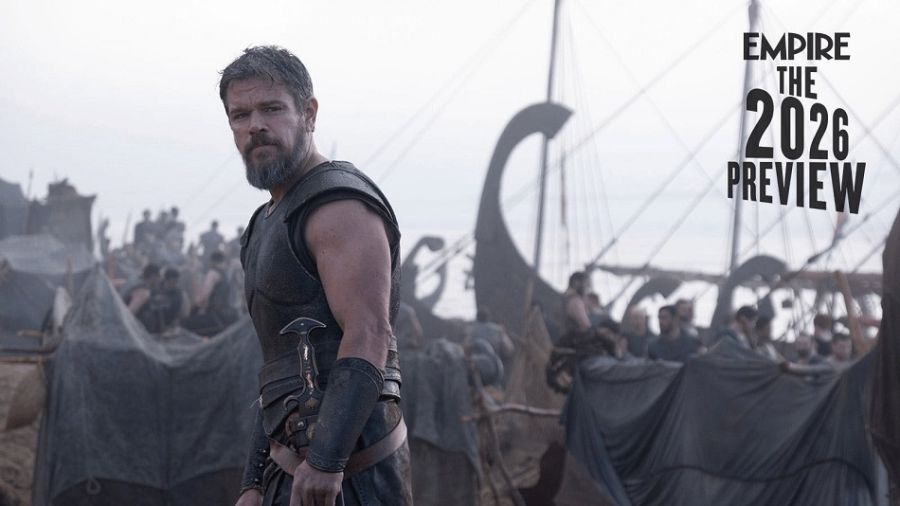
Today, the peaceful and adventurous The Odyssey, whose primary meaning lies not in glorifying war but in exploring human nature, destiny, and the limits of human capabilities in the face of death, has been transformed by the Oscar-winning director into a tragic military epic. In Christopher Nolan's The Odyssey, we see a true attraction of ultra-realism. The director intentionally strips the epic work of all its "mythicality." Instead of a beautiful legend, he shows the viewer a dirty, brutal war and its consequences, apparently believing that only through shock can the full horror of human history be conveyed. In fact, this turns into speculation on creating psychological discomfort for a person, confirming that in an era when special effects no longer surprise anyone, authors are looking for new ways to hook the audience. Physical and mental discomfort of the viewer (through deafening sound, a bleak palette, the deformity of monsters) becomes the main tool for holding attention.
It is no secret today that Hollywood increasingly entrusts massive budgets to authors with a very specific, sometimes genuinely "dark" vision of the world. Thus, the tragedy of Odysseus in this interpretation has turned not into a hymn to the human spirit, but into an exploration of borderline mental states. The most unpleasant part of this situation is that such content is promoted as the main blockbuster of the year. The viewer goes for a large-scale epic cinema based on a story familiar since childhood, but receives a heavy psychological drama they were not prepared for. Huge IMAX screens and aggressive sound design only intensify this effect, stripping the person of any ability to distance themselves from what is happening on screen. Cinema increasingly ceases to be art for humans and becomes a "cinematic monster" that demands too high an emotional price from the viewer.