

Stability as a strategic choice: The new logic of Italy–Azerbaijan partnership
In the contemporary stage of international relations, a clear trend is emerging toward the formation of flexible and pragmatic partnerships, based less on political or ideological considerations and more on energy security, supply stability, and control over strategic routes. Intensifying global competition for resources and the transformation of energy markets—particularly in Europe—objectively increase the importance of states capable of acting as reliable suppliers and transit hubs.
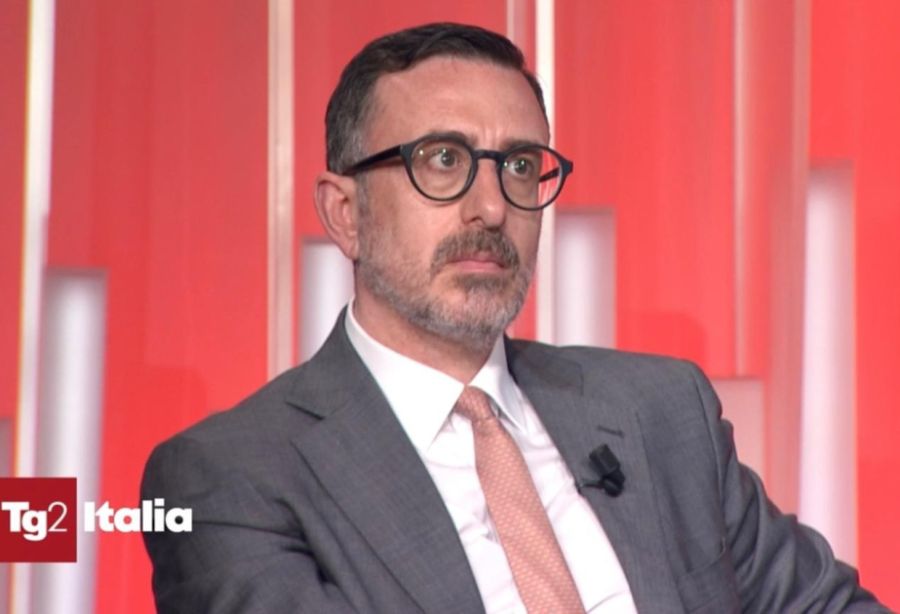
Italian expert Salvatore Santangelo, speaking to AZERTAC, said that within this new configuration, Azerbaijan occupies a distinctive position, combining resource potential with a strategically favorable geographic location at the crossroads of key transport and energy corridors. The implementation of the Trans Adriatic Pipeline (TAP) has cemented the country’s role as one of the key pillars in the diversification of gas supplies to Europe, a role that has become especially significant in recent years.
At the same time, leading European states are reassessing their external economic strategies. Italy, for instance, seeking to strengthen its energy resilience and diversify its partnership geography, has been steadily expanding its engagement with regions possessing strong resource potential.
In this context, Azerbaijan–Italy relations are gradually moving beyond the traditional “exporter–importer” model and evolving into a more complex strategic partnership. This is evidenced both by the expansion of political dialogue—including the visit of Italian President Sergio Mattarella to Baku last year—and by the institutionalization of cooperation through economic and investment initiatives, including Azerbaijan’s integration into broader Italian foreign economic frameworks such as the “Mattei Plan.”
Thus, the strengthening of ties between Baku and Rome reflects a broader trend—the formation of a new architecture of energy and economic cooperation in a changing world order. It is within this multilayered context that the visit of Italian Prime Minister Giorgia Meloni to Azerbaijan on May 4 should be viewed, as a logical continuation of the growing strategic dialogue between the two countries.
The Italian expert said this visit was not merely another diplomatic gesture, but a step dictated by the harsh logic of the times and rising global tensions.
According to him, although talks between Meloni and Azerbaijani President Ilham Aliyev formally focused on strengthening political and trade ties, a much deeper motive is evident beneath the surface: Italy’s desire to ensure stable supplies of natural gas and oil—resources that Azerbaijan possesses in abundance. In a context of global instability, energy is no longer just an economic issue; it becomes a matter of security and survival.
Santangelo noted that this visit was already Meloni’s third significant foreign trip since the escalation of the Middle East conflict: on March 25 she visited Algeria, and on April 3 she unexpectedly traveled to the Persian Gulf, where she met with the leaders of Saudi Arabia, the UAE, and Qatar. According to the expert, this reveals a clear strategy: Italy is actively “redrawing” its energy map in search of reliable partners and new supply routes.
“It becomes clear why in recent months Rome has placed increasing attention on relations with Azerbaijan. The visit to Baku is symbolic, as it was the first visit by an Italian head of government in 13 years. There is also an emotional dimension: it feels as if Italy is returning to a dialogue that had been on hold for too long,” the expert said.
Referring also to the business forum planned in Baku for the second half of 2026, he stressed that it is not merely a formality but an attempt to consolidate existing agreements and give new momentum to investment cooperation. Italy seeks to position itself as a channel for Azerbaijani economic interests in Europe, in exchange for firm and long-term guarantees of energy supplies.
The expert also placed this trajectory in a broader context: “Azerbaijan has been included in the so-called ‘Mattei Plan’—the Italian government’s strategy for Africa—which signals an expansion of Italy’s geographical interests. Moreover, it is worth noting President Sergio Mattarella’s visit to Baku in October last year, during which the first academic buildings of the Italy–Azerbaijan University were inaugurated. Cooperation between our countries goes far beyond energy, extending into education, culture, and long-term societal ties,” he said.
In conclusion, Santangelo emphasized that Giorgia Meloni and President Ilham Aliyev demonstrate a shared determination to expand the capacity of the Trans Adriatic Pipeline and deepen industrial cooperation. Italy, in his view, is increasingly positioning itself as a bridge between Baku and European markets, a role that carries not only calculation but also ambition—to become a key node in Europe’s emerging energy and economic architecture.