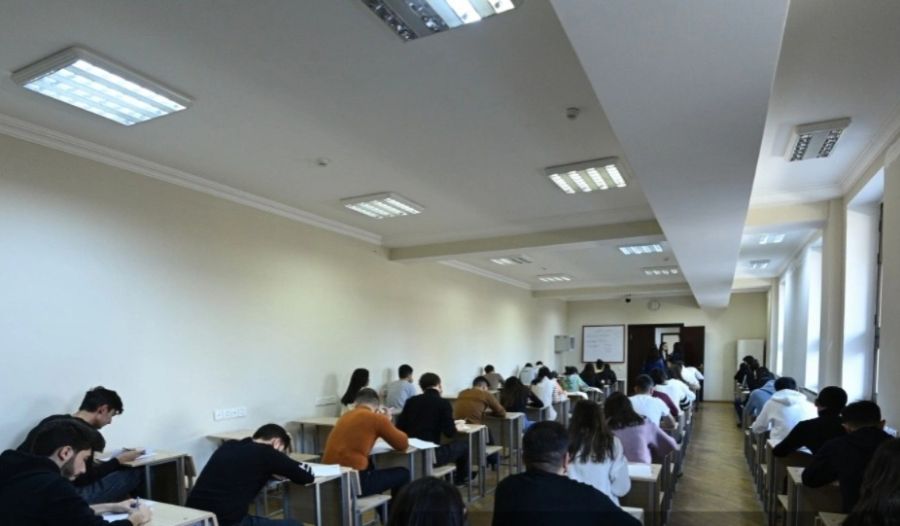
Outcomes of the International Expedition to Karabakh and Eastern Zangezur on October 9, 2026
01:38, October 12,2026 | Views: 48
Larisa Dzhavanshir
The Baku Declaration, adopted on October 8, 2026, following the IV International Conference within the framework of the Baku Dialogue on Missing Persons, constitutes a vital international legal and humanitarian document. The Baku Declaration consolidates the global community's shared priorities in resolving the issue of searching for disappeared citizens in armed conflict zones. Conference participants stated that they are guided by the provisions of the Geneva Conventions of August 12, 1949, for the Protection of War Victims, their Additional Protocols of 1977, as well as relevant resolutions of the United Nations General Assembly and Security Council. The declaration reiterates the unconditional obligation of states to take all necessary measures to fully account for individuals registered as missing as a result of military hostilities.
The document contains a direct and reiterated appeal to international organizations, primarily the UN, to facilitate the establishment of an international mechanism for persons missing as a result of armed conflicts. Participants of the Baku Dialogue officially declared their full readiness to cooperate closely with the UN for the swift formation and launch of the process to establish this structure.
The signatory parties highly commended the platform's activities, noting its transformation into a globally significant venue for developing unified national and international approaches to resolving humanitarian crises.
Participants of the IV International Conference within the framework of the Baku Dialogue on Missing Persons expressed their deep gratitude to the State Commission of the Republic of Azerbaijan on Prisoners of War, Hostages, and Missing Persons for organizing the conference at the highest level.
* * *
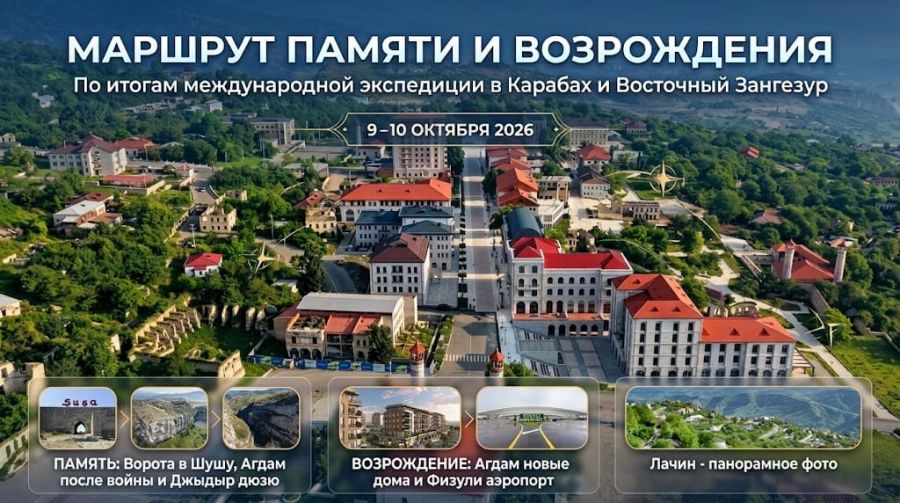
On October 9–10, 2026, a visit to the liberated regions of Azerbaijan took place, organized by the State Commission of Azerbaijan on Prisoners of War, Hostages, and Missing Persons. This initiative brought together the participants of the IV International Conference within the framework of the Baku Dialogue into a highly distinguished international delegation. The participants included former heads of state and government from various nations, leaders and high-ranking representatives of leading international humanitarian organizations, specialized forensic experts, molecular geneticists, human rights advocates, as well as foreign ambassadors and military attachés accredited to Azerbaijan. To provide a comprehensive understanding and comparison of international humanitarian law with practical realities and scientific methods of recovery in the liberated lands, the trip followed the route: Baku – Khojaly – Shusha – Aghdam – Fuzuli – Lachin.
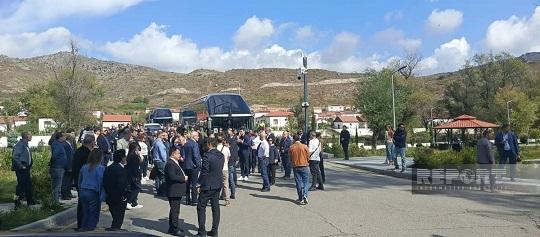
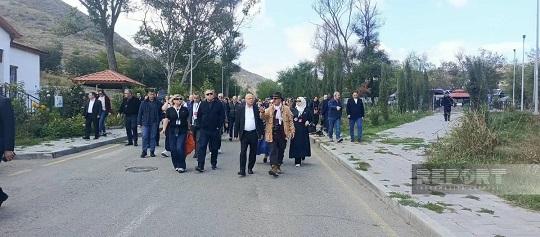
For international specialists in missing persons identification, the visit to these cities was of a deeply professional nature. Primary attention was focused on the highly complex technological, engineering, and medical challenges that Azerbaijan encounters in practice.
Digital Transformation and DNA Identification. During the conference and subsequent field visits, experts were presented with the performance outcomes of the Genetic Research Center under the Main Military Medical Directorate of the State Security Service of Azerbaijan. The laboratory, certified in accordance with stringent international standards, has already conducted high-precision genetic analysis on the remains of 328 individuals exhumed from mass graves. Participants highly commended the integration of automated systems designed to match the DNA profiles of bone remains with the database of DNA samples collected from the families of missing persons.
Specifics of Exhumation Operations. Through the inspection of mass graves (including the discovered remains of 31 individuals in Shusha), forensic experts examined the preservation characteristics of biological material within the specific soil conditions of Karabakh. Azerbaijani specialists shared their techniques for non-contact 3D scanning of burial sites prior to exhumation, which is utilized to document the anatomical integrity of the skeletons.
The Barrier of Total Mining. A critical technical aspect of the visit was gaining insight into the unprecedented mine threat. Delegates were clearly demonstrated that the search for hundreds of hidden individual and mass graves is critically obstructed due to the lack of minefield maps. The guests observed the operations of deminers and the deployment of advanced robotic demining systems, which must precede any search and exhumation activities.
KHOJALY
It is worth noting that the participants learned that this city is the cradle of the Khojaly-Gedabek archaeological culture dating back to the Late Bronze and Early Iron Ages (2nd–1st millennia BC). Discoveries of ancient burial mounds, unique black-polished ceramics, and beads bearing the cuneiform script of the Assyrian king Adad-nirari prove that 3,000 years ago, this land was a major crossroads of Ancient Eastern civilizations. This ancient history was brutally interrupted by a modern tragedy — the Khojaly Genocide of February 26, 1992. The delegates visited the new exhibition hall of the Khojaly Genocide Memorial Complex, constructed based on the concept of the Heydar Aliyev Foundation.
* Focus of the Visit (October 9–10, 2026): Reviewing the chronicle of the tragedy at the new Memorial Complex; presentation of non-contact 3D scanning technologies for burial sites.
SHUSHA
Historical Status and Significance. The fortress city was founded in 1752 as the impregnable capital of the Karabakh Khanate by Panah Ali Khan Javanshir, an outstanding statesman and military commander of his time; the city was originally named Panahabad in his honor.
For the participants of the international conference in October 2026, the name of Panah Ali Khan Javanshir became a key symbol in studying the region's history, as it was his strategic decision to construct a fortress on the inaccessible plateau that determined Shusha's destiny as the primary political and cultural
center of Karabakh for centuries to come. The diplomats were deeply impressed by the city's fortification architecture. The guests also learned about the contemporary status of the city as the "Conservatory of the Caucasus" — the birthplace of Uzeyir Hajibeyli, the poet Vagif, and the poetess Natavan.
* Focus of the Visit (October 9–10, 2026): Inspection of mass graves within the courtyard of the Shusha Prison (31 victims); a visit to the first newly constructed technological residential complex and a meeting with local residents.
AGHDAM
Aghdam: From Destruction to the Revival of the "Hiroshima of the Caucasus"
FUZULI
Fuzuli: The Air Gateway of Karabakh and Demining Challenges
The Fuzuli District was presented to the conference participants as a high-tech transportation hub and a primary outpost for highly complex engineering and demining operations. The delegation familiarized themselves with the operations of the Fuzuli International Airport, which was constructed in record time and designated as the "Air Gateway of Karabakh." The guests visited the city's new residential areas, built according to energy-efficient environmental standards, and inspected social infrastructure facilities currently under construction.
* Mine Terror as the Primary Obstacle to the Humanitarian Mission. It was precisely in Fuzuli where forensic experts and representatives of the State Commission of Azerbaijan conducted a field briefing for international guests, focusing on the technical details of locating missing persons. It was clearly demonstrated to the delegates that the Fuzuli District was one of the most heavily mined zones in the world. It was emphasized that Armenia's concealment of accurate minefield maps directly blocks operations aimed at searching for and exhuming the bodies of hundreds of Azerbaijanis registered as missing since the First Karabakh War. The guests observed the land clearance process conducted by ANAMA specialists utilizing robotic systems.
LACHIN (Zabukh Village)
Masim Mamedov, the Special Representative of the President of Azerbaijan, familiarized the delegation with the concept of its complete reconstruction. The participants witnessed how a modern "smart village" has been erected on the site of destruction, where indigenous residents are already returning en masse under the "Great Return" program. The visit concluded at the picturesque waterfront of the Hakari River.
* Historical Status and Significance: A strategic district of Eastern Zangezur, historically connecting the region with international transportation routes.
* Focus of the Visit (October 9–10, 2026): Demonstration of the "Smart Village" concept, which functions entirely on eco-friendly green technologies; a meeting with the first returned families.
Outcomes of the International Expedition to Karabakh and Eastern Zangezur on October 9, 2026
19:38, October 11, 2026 | Views: 48
Larisa Dzhavanshir
The Baku Declaration, adopted on October 8, 2026, following the IV International Conference within the framework of the Baku Dialogue on Missing Persons, constitutes a vital international legal and humanitarian document. The Baku Declaration consolidates the global community's shared priorities in resolving the issue of searching for disappeared citizens in armed conflict zones. Conference participants stated that they are guided by the provisions of the Geneva Conventions of August 12, 1949, for the Protection of War Victims, their Additional Protocols of 1977, as well as relevant resolutions of the United Nations General Assembly and Security Council. The declaration reiterates the unconditional obligation of states to take all necessary measures to fully account for individuals registered as missing as a result of military hostilities.
The document contains a direct and reiterated appeal to international organizations, primarily the UN, to facilitate the establishment of an international mechanism for persons missing as a result of armed conflicts. Participants of the Baku Dialogue officially declared their full readiness to cooperate closely with the UN for the swift formation and launch of the process to establish this structure.
The signatory parties highly commended the platform's activities, noting its transformation into a globally significant venue for developing unified national and international approaches to resolving humanitarian crises.
Participants of the IV International Conference within the framework of the Baku Dialogue on Missing Persons expressed their deep gratitude to the State Commission of the Republic of Azerbaijan on Prisoners of War, Hostages, and Missing Persons for organizing the conference at the highest level.
* * *
On October 9–10, 2026, a visit to the liberated regions of Azerbaijan took place, organized by the State Commission of Azerbaijan on Prisoners of War, Hostages, and Missing Persons. This initiative brought together the participants of the IV International Conference within the framework of the Baku Dialogue into a highly distinguished international delegation. The participants included former heads of state and government from various nations, leaders and high-ranking representatives of leading international humanitarian organizations, specialized forensic experts, molecular geneticists, human rights advocates, as well as foreign ambassadors and military attachés accredited to Azerbaijan. To provide a comprehensive understanding and comparison of international humanitarian law with practical realities and scientific methods of recovery in the liberated lands, the trip followed the route: Baku – Khojaly – Shusha – Aghdam – Fuzuli – Lachin.
For international specialists in missing persons identification, the visit to these cities was of a deeply professional nature. Primary attention was focused on the highly complex technological, engineering, and medical challenges that Azerbaijan encounters in practice.
Digital Transformation and DNA Identification. During the conference and subsequent field visits, experts were presented with the performance outcomes of the Genetic Research Center under the Main Military Medical Directorate of the State Security Service of Azerbaijan. The laboratory, certified in accordance with stringent international standards, has already conducted high-precision genetic analysis on the remains of 328 individuals exhumed from mass graves. Participants highly commended the integration of automated systems designed to match the DNA profiles of bone remains with the database of DNA samples collected from the families of missing persons.
Specifics of Exhumation Operations. Through the inspection of mass graves (including the discovered remains of 31 individuals in Shusha), forensic experts examined the preservation characteristics of biological material within the specific soil conditions of Karabakh. Azerbaijani specialists shared their techniques for non-contact 3D scanning of burial sites prior to exhumation, which is utilized to document the anatomical integrity of the skeletons.
The Barrier of Total Mining. A critical technical aspect of the visit was gaining insight into the unprecedented mine threat. Delegates were clearly demonstrated that the search for hundreds of hidden individual and mass graves is critically obstructed due to the lack of minefield maps. The guests observed the operations of deminers and the deployment of advanced robotic demining systems, which must precede any search and exhumation activities.
KHOJALY
It is worth noting that the participants learned that this city is the cradle of the Khojaly-Gedabek archaeological culture dating back to the Late Bronze and Early Iron Ages (2nd–1st millennia BC). Discoveries of ancient burial mounds, unique black-polished ceramics, and beads bearing the cuneiform script of the Assyrian king Adad-nirari prove that 3,000 years ago, this land was a major crossroads of Ancient Eastern civilizations. This ancient history was brutally interrupted by a modern tragedy — the Khojaly Genocide of February 26, 1992. The delegates visited the new exhibition hall of the Khojaly Genocide Memorial Complex, constructed based on the concept of the Heydar Aliyev Foundation.
* Focus of the Visit (October 9–10, 2026): Reviewing the chronicle of the tragedy at the new Memorial Complex; presentation of non-contact 3D scanning technologies for burial sites.
SHUSHA
Historical Status and Significance. The fortress city was founded in 1752 as the impregnable capital of the Karabakh Khanate by Panah Ali Khan Javanshir, an outstanding statesman and military commander of his time; the city was originally named Panahabad in his honor.
For the participants of the international conference in October 2026, the name of Panah Ali Khan Javanshir became a key symbol in studying the region's history, as it was his strategic decision to construct a fortress on the inaccessible plateau that determined Shusha's destiny as the primary political and cultural center of Karabakh for centuries to come. The diplomats were deeply impressed by the city's fortification architecture. The guests also learned about the contemporary status of the city as the "Conservatory of the Caucasus" — the birthplace of Uzeyir Hajibeyli, the poet Vagif, and the poetess Natavan.
* Focus of the Visit (October 9–10, 2026): Inspection of mass graves within the courtyard of the Shusha Prison (31 victims); a visit to the first newly constructed technological residential complex and a meeting with local residents.
AGHDAM
Aghdam: From Destruction to the Revival of the "Hiroshima of the Caucasus"
FUZULI
Fuzuli: The Air Gateway of Karabakh and Demining Challenges
The Fuzuli District was presented to the conference participants as a high-tech transportation hub and a primary outpost for highly complex engineering and demining operations. The delegation familiarized themselves with the operations of the Fuzuli International Airport, which was constructed in record time and designated as the "Air Gateway of Karabakh." The guests visited the city's new residential areas, built according to energy-efficient environmental standards, and inspected social infrastructure facilities currently under construction.
* Mine Terror as the Primary Obstacle to the Humanitarian Mission. It was precisely in Fuzuli where forensic experts and representatives of the State Commission of Azerbaijan conducted a field briefing for international guests, focusing on the technical details of locating missing persons. It was clearly demonstrated to the delegates that the Fuzuli District was one of the most heavily mined zones in the world. It was emphasized that Armenia's concealment of accurate minefield maps directly blocks operations aimed at searching for and exhuming the bodies of hundreds of Azerbaijanis registered as missing since the First Karabakh War. The guests observed the land clearance process conducted by ANAMA specialists utilizing robotic systems.
LACHIN (Zabukh Village)
Masim Mamedov, the Special Representative of the President of Azerbaijan, familiarized the delegation with the concept of its complete reconstruction. The participants witnessed how a modern "smart village" has been erected on the site of destruction, where indigenous residents are already returning en masse under the "Great Return" program. The visit concluded at the picturesque waterfront of the Hakari River.
* Historical Status and Significance: A strategic district of Eastern Zangezur, historically connecting the region with international transportation routes.
* Focus of the Visit (October 9–10, 2026): Demonstration of the "Smart Village" concept, which functions entirely on eco-friendly green technologies; a meeting with the first returned families.
The stark contrast between the witnessed traces of war, the knowledge-intensive process of victim identification, and the futuristic pace of reconstruction evoked a powerful emotional response from the delegates:
Direct Speech and Comments of the Expedition Participants
Representatives of International Human Rights Organizations and Genetic Experts:
"What we have witnessed in Khojaly and Shusha proves that Azerbaijan is establishing one of the world's most advanced precedents for forensic and DNA archaeology in post-conflict zones. The manner in which technology is restoring the names of missing persons after 30 years should become an international standard."
Foreign Diplomats and Former Heads of Government:
"We are profoundly astounded by the scale of the 'Great Return' project. Transforming Lachin and Shusha from ruins into flourishing, high-tech cities within such a short timeframe is a monumental triumph of engineering thought and state will. However, the most critical element remains the smiles on the faces of the people who have returned to their homes."
Former Prime Minister of Moldova (Delegation Member):
"What we saw in Aghdam is deeply shocking — the scale of destruction inflicted upon mosques and cultural monuments, such as the 'Imaret' complex, defies human comprehension. This represents a deliberate annihilation of the identity of an entire region. Nonetheless, the velocity with which Azerbaijan is raising this city from the ashes today, constructing roads and developing new residential quarters, commands deep respect. Armenia is obligated to demonstrate humanitarianism and share all available information regarding mass graves and minefields so that this region can finally heal."
Representatives of International Human Rights Expert Organizations:
"In Fuzuli, it becomes evident that the mine threat is not merely a military barrier; it is an ongoing humanitarian crisis that deprives thousands of families of their right to learn the truth about their missing relatives. Without clearing these lands of mines, conducting proper exhumations is impossible. Azerbaijan is deploying spectacular technologies and colossal resources for demining, but the international community must exert more powerful pressure to expedite the process of transferring burial site maps."
* **
* Lord Graham Brady, Member of the UK House of Lords:
"We see the colossal efforts that Azerbaijan is making to rebuild the city of Shusha and revive its community. New modern facilities are being constructed, including mosques, residential buildings, schools, and medical institutions necessary for the full-scale return of the people. The new housing will allow internally displaced persons to return with their families and once again make Shusha their home. We are incredibly impressed by the scale of the work accomplished."
"I was also deeply moved by the stories of people who for years, for entire decades, have remained in agonizing uncertainty regarding the fates of their loved ones. Visiting the Memorial Complex to the Victims of the Khojaly Genocide and gaining a close understanding of Karabakh's history will remain in my memory forever."
* Kathryne Csekey Bomberger, Director-General of the International Commission on Missing Persons (ICMP):
"The issue of missing persons knows no borders and demands a consolidated, science-based approach. The work being carried out by Azerbaijan in the application of molecular genetics and the creation of automated databases for the DNA profiles of exhumed remains deserves deep recognition. This serves as an exemplary model of forensic DNA archaeology. However, what we have witnessed on the ground confirms our apprehensions: the mine threat is the primary enemy of humanitarian search missions. International institutions must more actively facilitate a technical solution to this issue."
* Gian Luca Beruto, Secretary-General of the International Institute of Humanitarian Law:
"Clarifying the fates of the missing is not an abstract norm of the Geneva Conventions; it is a direct humanitarian obligation prescribed by international law. Visiting Khojaly and Shusha compels us, as legal experts, to declare once more: the concealment of information regarding mass graves is unacceptable, as it continues to traumatize thousands of families. The Baku Declaration, which we have adopted, represents a firm step toward the UN finally establishing a dedicated mechanism to resolve these crises worldwide."
The Voice of the Native Land: Comments from Residents of the New Residential Complex in Shusha
* Famil Nasirov, Shusha Resident and Veteran:
"For over thirty years, we lived with a longing for our home and faith in justice. Today, as my children attend a new school in Shusha and our future is being built right outside our window, we feel that we have returned forever. However, for our family, this conference holds a special significance — my uncle went missing during the First Karabakh War. The fact that scientists and diplomats have come directly to our courtyard gives us hope that after three decades, we will finally be able to learn where he is buried and find peace."
* Gulnara Mamedova, Teacher and Shusha Native:
"Our complex is constructed in the traditional Shusha architectural style, yet inside, there are smart, comfortable 21st-century apartments. Life is triumphing over the ruins. We see the city growing every single day, with a grand new mosque being built and hospitals opening. We are home, and Karabakh will never be silenced again."