Social media restrictions in Azerbaijan aim to protect children - OPINION

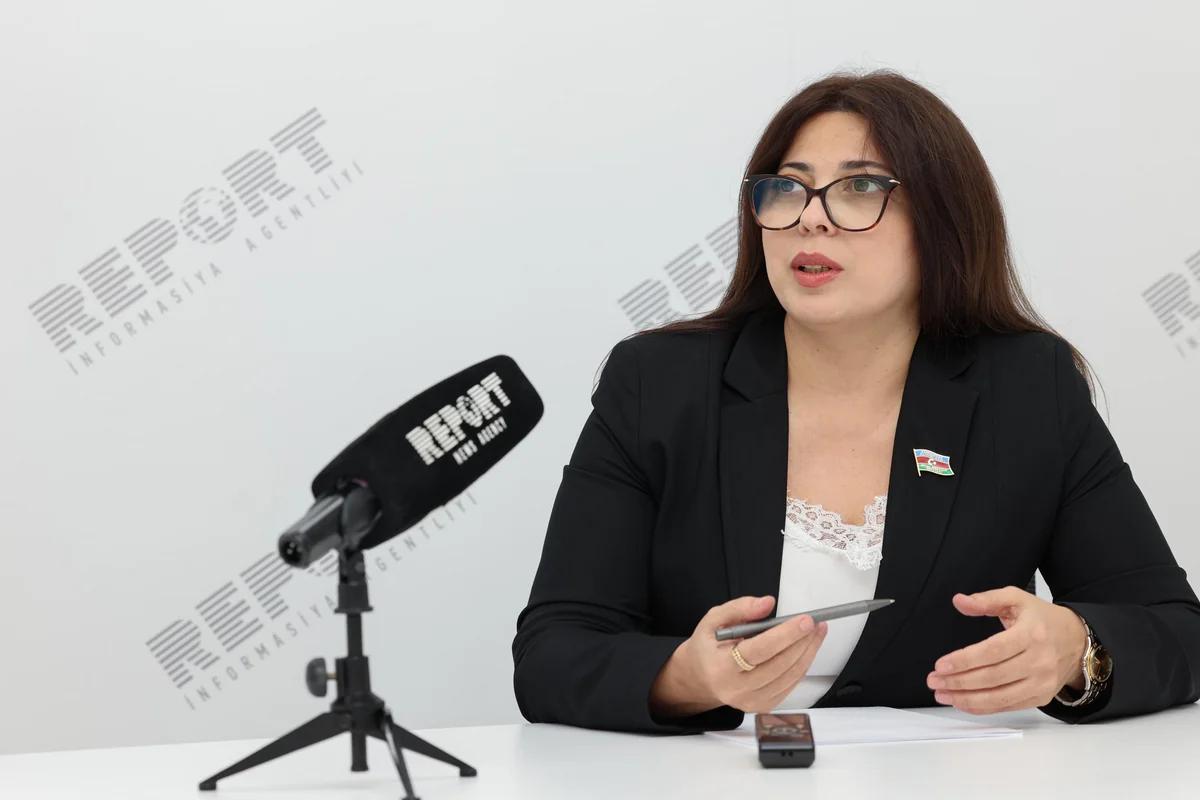
The implementation of restrictions on the registration of children under 16 on social networks in Azerbaijan and the provision for teenagers aged 16-18 to use these platforms with parental consent is precisely an adequate and far-sighted response to these global challenges, Azerbaijani MP Sabina Salmanova told Report.
According to Salmanova, in the 21st century, the development of digital technologies has become one of the main factors in the social, economic, and cultural life of states:
"While internet and social media platforms have created broad opportunities for obtaining information, communication, education, and participation in public processes, they have also created new risks and dangers, especially for children and teenagers. For this reason, in recent years, ensuring children's safety in the digital environment has become one of the priority directions of state policy in many countries. This initiative primarily serves to protect the rights and interests of children, ensure their healthy psychological development, and strengthen their safety in the digital environment."
The MP noted that research shows that unsupervised use of social networks among children and teenagers can lead to the formation of psychological dependency, an increase in aggressive behavior, exposure to the effects of disinformation, breaches of personal data security, and an increase in cases of cyberbullying:
"In particular, access to various content without considering age characteristics is one of the factors negatively affecting the formation of minors' worldview and behavioral models. In this regard, it would be incorrect to approach the issue in the context of 'banning social networks.' This is not about isolating children from the information space, but about ensuring their safety in the digital environment and more reliably protecting their rights. The main purpose of the envisaged legal mechanisms is the implementation of an age verification system during registration on social media platforms, strengthening parental control, and protecting minors from harmful information. In fact, this approach is not new for Azerbaijani society. Today, no one considers the restrictions applied to the sale of cigarettes, alcoholic beverages, or edged weapons to minors as a violation of rights. Similarly, restricting access to pornographic and other harmful content is an accepted legal practice in most countries of the world."
Salmanova also pointed out that one of the main duties of the state is to protect children from factors that may negatively affect their physical, moral, and psychological development:
"Since the digital environment has become an integral part of our lives, extending these protective mechanisms to social media platforms is an entirely logical and necessary step. Azerbaijan is not forming a legal framework from scratch in this direction. The law 'On the Protection of Children from Harmful Information,' adopted back in 2018, not only ensured children's right to obtain information appropriate to their age characteristics but also established the legal foundations for their protection from harmful content. Currently, the amendments made to the relevant law should be assessed as the development of that state policy at the level of digital platforms and its adaptation to modern realities."
She further highlighted that one of the noteworthy points is that Azerbaijan takes international experience into account in this area:
"In recent years, legislative initiatives regarding children's use of social networks have expanded significantly in various countries around the world. Australia has adopted a law providing for serious restrictions on the use of certain social media platforms by persons under 16. In France, a parental consent mechanism is applied for the use of social networks by persons under 15. In the UK, special obligations have been established for platforms to ensure children's digital safety. Similar legal mechanisms are being implemented or are in the preparation stage in several US states, Germany, Canada, Norway, and other countries. Interestingly, regional countries have also begun to pursue active legal regulation policies in this regard. In Kazakhstan and Uzbekistan, new legislative initiatives are being discussed to ensure children's safety on social media platforms. This shows that we are not talking about initiatives of individual states, but about solving a common problem of a global nature that all countries face."
The MP stated that the provision for the law to enter into force within 12 months after its adoption is also a manifestation of a well-thought-out and systematic approach:
"During this period, the implementation of age determination mechanisms, preparation of technical solutions, establishment of cooperation mechanisms with platforms, as well as the conduct of awareness-raising activities among parents and the public are planned. Today, children's digital safety is no longer solely the responsibility of the family. It has become a strategically important issue in which the state, society, the education system, and digital platforms bear joint responsibility."
Salmanova emphasized that the step taken by Azerbaijan in this regard serves to ensure the healthy development of the future generation, their formation in a safe information environment, and their more prepared integration into the digital world:
"The new legal regulations regarding children's use of social networks are not restrictive but protective in nature. This initiative is one of the important directions of state policy that corresponds to the realities of the modern era, is based on international experience, and considers the interests of the future generation as a priority."