Pensions to be indexed, tax to be raised: Key points in Azerbaijan’s 2027 budget
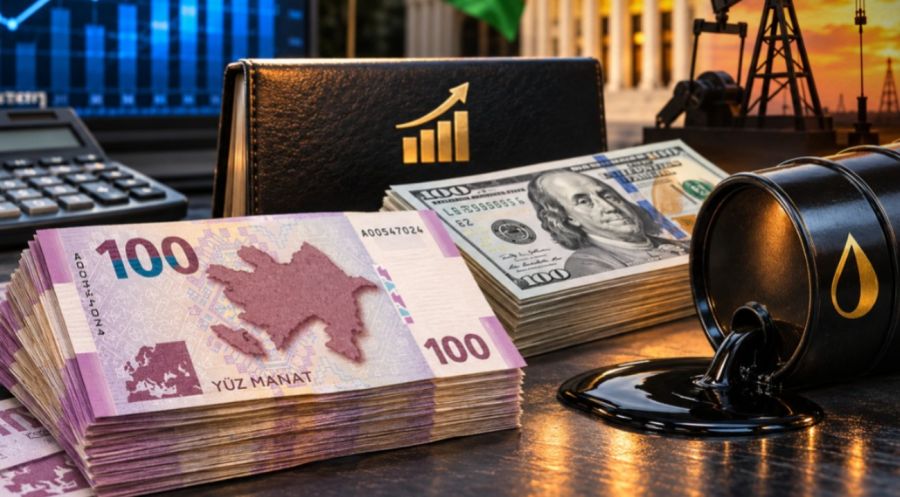
Discussions on the draft state budget for 2027 have started in Azerbaijan. Its main feature is ensuring moderate growth in revenues and expenditures while reducing transfers from the oil fund. Thus, amidst the ongoing structural restructuring of the economy, the state expects to generate more funds from the non-oil sector while maintaining the financing of social obligations, security-related items, and the restoration of liberated territories.
In next year's budget, revenues are projected at 39.254 billion manats, and expenditures at 42.4 billion manats. Both figures are approximately 1.7% higher than those approved for 2026. Meanwhile, the deficit will be around 3.15 billion manats and will not change significantly. However, this circumstance in itself is not a cause for concern, as planning a budget with a deficit is a common international practice. What is more important is how well its size corresponds to the capabilities of the economy and what sources are used to cover it.
The budget calculations are based on an average annual oil price of $65 per barrel. If the actual price turns out to be higher, this will provide additional oil revenues. If lower, revenues will decrease, although accumulated reserves will help smooth out the consequences for financing expenditures. Therefore, oil market conditions remain of great significance. At the same time, ongoing geopolitical uncertainty can maintain high oil prices and, accordingly, significant revenues even against the backdrop of declining oil production in recent years.
The main change in the revenue side of the budget is the reduction of the transfer from the State Oil Fund from 12.835 billion to 11.9 billion manats. At the same time, the share of non-oil and gas revenues is expected to increase from 57.4% to 60.6%. This is a positive shift, as the budget becomes less dependent on the direct use of oil savings. Although, to be frank, the increase in non-oil collections cannot be fully explained by production growth. They are also affected by prices, tax collection rates, and tax changes. In particular, for employees in the private non-oil sector with a monthly income of up to 2,500 manats, an increase in the income tax rate from 3% to 5% is envisaged. Consequently, part of the additional revenues will be provided by an increased tax burden.
Meanwhile, budget expenditures are increasing by 1.7% with a projected inflation rate of 5.3%, which increases the importance of rational use of funds. At the same time, moderate growth in the overall budget volume does not exclude an increase in public incomes. The financial provision for the next package of social reforms aimed at raising wages and social benefits is envisaged for 2027, and the indexing of labor pensions is also expected. These measures should mitigate the impact of price growth and support the purchasing power of the population. At the same time, it is important that the increase in wages and social benefits ensures real growth in public incomes and does not become an additional factor accelerating inflation. This is why it is essential to ensure that demand growth is accompanied by the expansion of production and the supply of goods and services.
Notably, expenditures on economic activity are increasing by 13.4% to nearly 8.91 billion manats, and on agriculture by 12.5% to 1.38 billion manats. This is consistent with the task of developing the non-oil economy as a whole and implementing a number of industry programs aimed at expanding production, developing processing, improving water supply and irrigation, and enhancing transport infrastructure. At the same time, the increase in the supply of local products is expected to help reduce import dependence and curb price growth in the domestic market.
Socially oriented expenditures will amount to about 18.7 billion manats, an increase of 9.2%. At the same time, additional funds are distributed taking into account specific tasks, including raising wages and social benefits. Therefore, the volumes of financing increases in individual areas will vary.
About 8.82 billion manats are earmarked for defense and national security—1.1% more than in the 2026 budget. Maintaining a high level of these expenditures is consistent with President Ilham Aliyev's stance on the need to constantly strengthen the country's defense capability. Speaking at the 8th Congress of the New Azerbaijan Party, he noted that wars do not stop and new hotbeds of conflict are emerging, emphasizing: "Therefore, we must be ready every day to respond to any military provocation."
Thus, defense financing is viewed as a necessary condition for maintaining security against the backdrop of external risks and a rapidly changing international environment.
In 2027, it is planned to direct 3.4 billion manats to the Great Return, compared to 3.5 billion for the restoration of liberated territories in the 2026 budget. Financing in this part also remains significant. At the same time, the slight reduction next year should be viewed in light of the large-scale work carried out previously, although the exact reasons for the change in the amount require separate evaluation. As facilities are completed, their utilization, population resettlement, and job creation are gaining increasing importance.
Thus, the draft budget aligns with the medium-term course of reducing oil dependency. In 2027, non-oil revenues should cover 90.1% of current expenditures, and by the end of the medium-term period, fully ensure their financing. Meanwhile, the sustainability of these changes depends on how much revenue growth is based on the expansion of production, exports, and private investment. Without a doubt, the development of this base should gradually reduce the need for oil funds without compromising social obligations and state programs.